Student wellbeing is not just individual. It is relational
Why peer relationships, belonging, and school connectedness matter for school wellbeing strategy

Peng Wang
Director
May 14, 2026 / 6 min Read
Overview Student wellbeing is shaped not only by individual characteristics, but also by students’ relationships with peers, teachers, and the wider school environment. Research consistently links school belonging, peer support, school connectedness, and inclusive school climate with students’ mental health, behaviour, engagement, attendance, and learning outcomes [1–6]. For school leaders, this means wellbeing cannot be understood only through individual student data. Attendance records, behaviour incidents, wellbeing surveys, academic results, and staff observations are important, but they may not reveal the relational context shaping a student’s everyday experience at school. | Leadership questions · What are we missing if we only look at individual wellbeing data? · Which students are quietly disconnected but not yet visible as “at risk”? · Where is belonging being built — and where is it breaking down? · Are we seeing the peer context around attendance, behaviour, and engagement? · How can we act earlier, before relational issues escalate? |
Why this matters for school leaders
Many wellbeing concerns become visible only after they appear as attendance issues, disengagement, behaviour concerns, peer conflict, or increased support needs. Yet the underlying social conditions may have been developing earlier: isolation, exclusion, weak belonging, negative peer dynamics, or lack of trusted support.
A relational view helps schools ask a different set of questions:
• Who feels included, supported, and connected?
• Who may be socially isolated or drifting to the edge of the peer group?
• Which students are trusted sources of support for others?
• Where might negative peer dynamics or disrespect be concentrated?
• Which groups, cohorts, or year levels may need stronger belonging and connection?
This does not replace professional judgement. It gives school leaders and wellbeing teams another layer of evidence to support earlier, more targeted, and more practical action.
What the evidence says
Evidence Theme | What research shows | What this means for schools |
| School belonging | A meta-analysis of secondary school students found that school belonging is associated with motivational, social-emotional, behavioural, and academic outcomes [1]. | Belonging should be treated as a core wellbeing and learning condition, not as a “soft” extra. |
| School connectedness | The CDC describes school connectedness as a protective factor linked with better health, attendance, grades, test scores, and graduation outcomes [3]. | Connection is part of prevention: it supports student health, engagement, attendance, and learning. |
| Peer relationships | Positive peer relationships in the middle years support social and emotional development; peer support can help students manage transitions, including moving to secondary school [4]. | Schools need to understand peer support structures, not only individual risk indicators. |
| School climate and mental health | Research using a social ecological perspective links school belonging, positive student-teacher relationships, inclusivity, and peer factors with adolescent mental health [2]. | Wellbeing strategy should consider the student’s wider school and peer environment. |
| Bullying and support | Longitudinal research indicates social support can buffer some adverse effects of bullying on mental health and academic achievement [5]. | Support networks matter when planning responses to bullying, exclusion, and peer conflict. |
| Peer networks | Recent research reviews show peer networks can help explain academic achievement and school outcomes in K–12 contexts [6]. | Social network analysis can reveal isolation, peer groups, influence, and relational patterns that individual surveys may miss. |
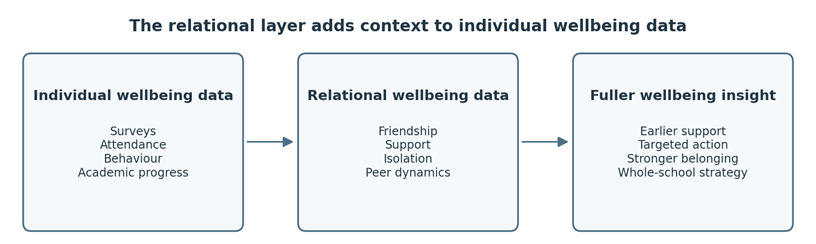
Figure 1. The relational layer of wellbeing insight.
Why relationship data adds value
Most school wellbeing data tells schools how individual students are doing. That is valuable, but incomplete. Relationship data adds a second layer: it helps schools understand the social context around students.
For example, two students may report similar wellbeing concerns, but their relational situations may be very different. One may be socially isolated. Another may be connected to a negative peer group. Another may be a trusted support person for others but under pressure themselves.
By mapping peer-to-peer relationships alongside wellbeing indicators, schools can better understand:
· social isolation and hidden disconnection
· friendship and support structures
· peer influence and informal leadership
· negative peer dynamics
· students who may be important connectors
· groups or cohorts where belonging may need strengthening
This is the central logic behind social network analysis in schools: if relationships shape wellbeing, then schools need a way to see relational patterns.
How SNA Toolbox helps
SNA Toolbox helps schools combine student wellbeing data with peer relationship mapping to reveal patterns that are difficult to see from individual data alone.
The platform is designed to help approved school staff identify:
· students who may be socially isolated
· students who are important peer connectors or trusted supports
· friendship and support groups
· negative or disrespectful peer dynamics
· cohort-level patterns in belonging, support, and wellbeing
· areas where earlier intervention, monitoring, or whole-school action may be needed
The aim is not to label students. The aim is to give schools clearer insight so they can support students earlier, strengthen belonging, and make wellbeing decisions with greater confidence.
Practical implications
Student wellbeing is not only an individual issue. It is also relational.
| Individual data tells schools how students are doing. Relational data helps schools understand the peer and school environment shaping that experience. Together, they give school leaders a fuller picture of wellbeing, belonging, behaviour, and support needs. |
References
[1] Korpershoek, H., Canrinus, E. T., Fokkens-Bruinsma, M., & De Boer, H. (2020). The relationships between school belonging and students’ motivational, social-emotional, behavioural, and academic outcomes in secondary education: A meta-analytic review. Research papers in education, 35(6), 641-680.
[2] Long, E., Zucca, C., & Sweeting, H. (2021). School climate, peer relationships, and adolescent mental health: A social ecological perspective. Youth & society, 53(8), 1400-1415.
[3] Centers for Disease Control and Prevention. (2024). School connectedness helps students thrive. https://www.cdc.gov/youth-behavior/school-connectedness/index.html
[4] Australian Institute of Family Studies. (2024). The influence of peer relationships in the middle years on mental health. https://aifs.gov.au/resources/policy-and-practice-papers/influence-peer-relationships-middle-years-mental-health
[5] Rothon, C., Head, J., Klineberg, E., & Stansfeld, S. (2011). Can social support protect bullied adolescents from adverse outcomes? A prospective study on the effects of bullying on the educational achievement and mental health of adolescents at secondary schools in East London. Journal of adolescence, 34(3), 579-588.
[6] Black, A., Warstadt, M. F., & Mamas, C. (2025). It's who you know: a review of peer networks and academic achievement in schools. Frontiers in Psychology, 15, 1444570.
[7] Australian Education Research Organisation. (2025). Evidence-based practices in school settings for student wellbeing. https://www.edresearch.edu.au/research/research-reports/evidence-based-practices-school-settings-student-wellbeing
[8] Australian Education Research Organisation. (2023). Encouraging a sense of belonging and connectedness in secondary schools. https://www.edresearch.edu.au/guides-resources/practice-guides/encouraging-belonging-and-connectedness-secondary
Tags:
Transform Your Organisation with SNA Toolbox
Unlock insights into the key factors driving success and wellbeing in your organisation. Reach out to us at SNA Toolbox to explore how we can support and elevate your goals. Let's make an impact together!